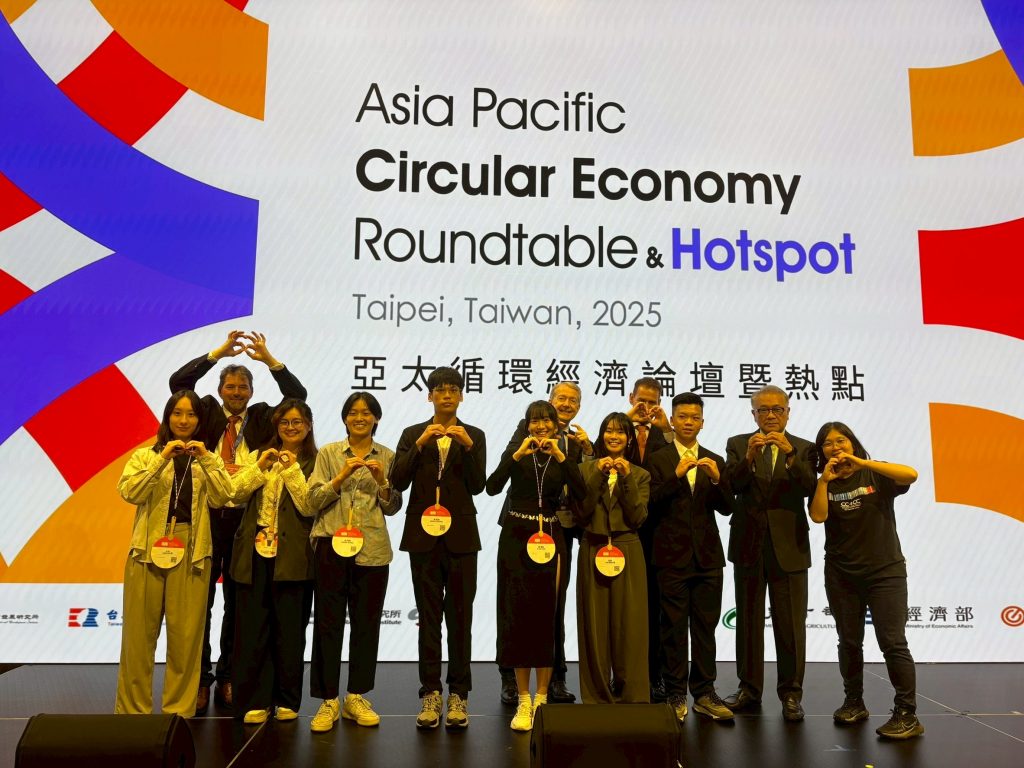
At this year’s Asia-Pacific Circular Economy Roundtable & Hotspot (APCER & Hotspot 2025), a group of young participants from Taiwan and abroad, supported by the Circular Taiwan Network, experienced the international circular economy stage for the first time. Representing diverse backgrounds—high school students, university students, and members of campus sustainability clubs—they converged in a shared international forum. Despite differences in disciplines, life stages, and focus areas, they found a common anchor in the forum’s rich content:
“Circular Trilogy” is not merely a slogan, but a clear and logical framework for understanding the circular economy.
The concept of the Three “Goods”—Good Governance, Good Ideas, Good Business—became central to how these young participants understood the circular economy. They gradually grasped the interconnections among the three elements, gaining particular inspiration from the “Good Ideas” and “Good Business” aspects. Here, “Good Ideas” extends beyond mere innovation—it represents a mindset that breaks existing frameworks to solve problems from new perspectives. This is true circular practice, not linear recycling or waste reduction. The participants observed that countries worldwide are seeking solutions for circularity, and the Circular Trilogy provides a shared language and framework to engage with the world.
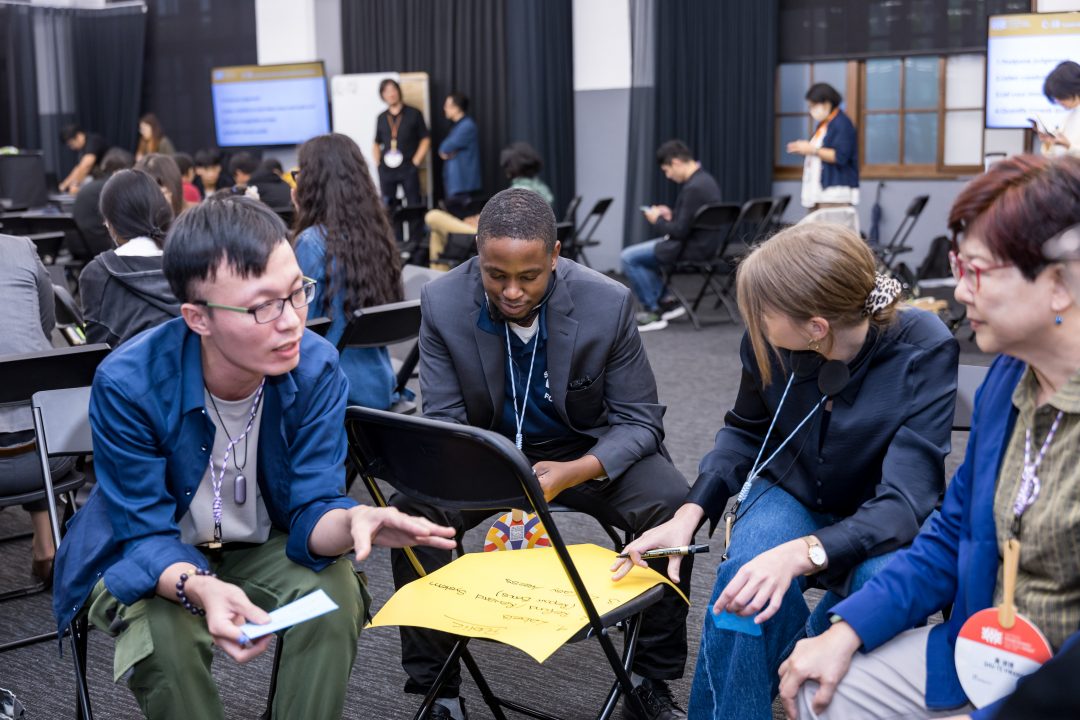
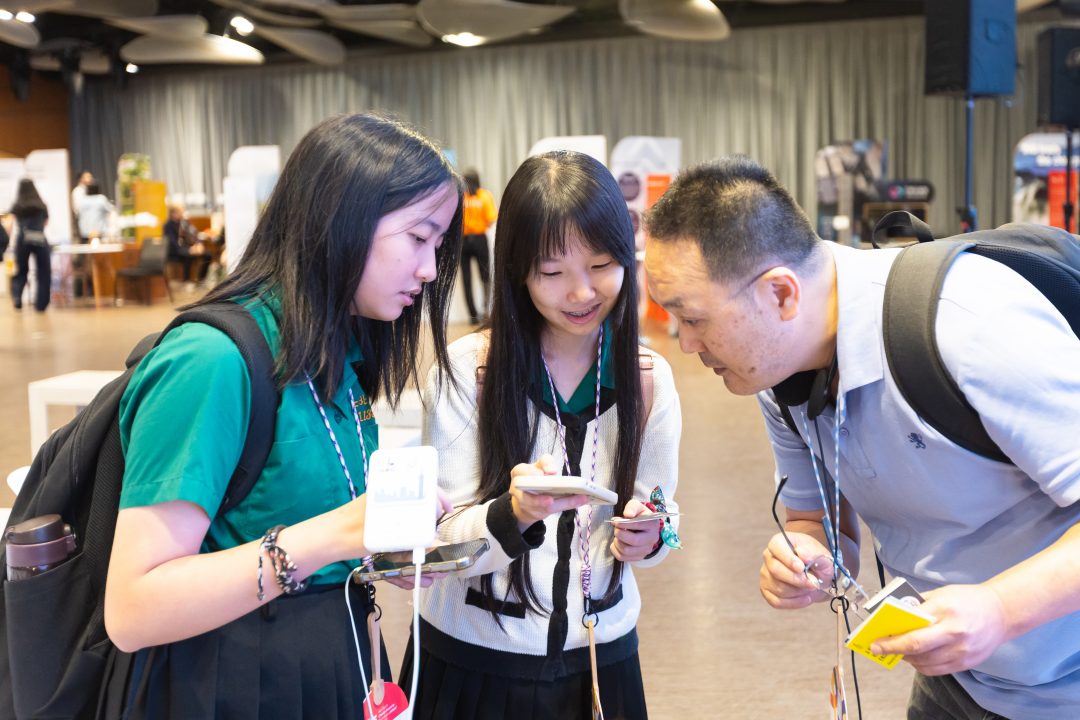
Youth Discover the Logic of the Circular Trilogy Through Complex Issues
The forum agenda spanned multiple circular ecosystems: agriculture and food, plastics and packaging, construction and building, high-tech and electronics, textiles, energy and critical materials, as well as policy governance, financial mechanisms, corporate transformation, trade tracking, and consumer engagement. The young participants were not passive observers; they actively explored the question: How does the circular economy really work? Gradually, they reached a consensus: the complexity of the circular economy arises from the simultaneous operation of good ideas + good governance + sustainable business models.
This logic aligns closely with the Circular Taiwan Network’s Circular Trilogy framework:
- Good Ideas: Reflecting on root needs, what do people truly require?
The circular innovations observed by the participants went far beyond simple recycling—they redefined industrial logic. Examples included: transforming pineapple leaf fibers into high-quality textiles, converting oyster shells into functional textile materials, and shifting electronics toward service-based models. Participants recognized that circular economy means Redefining (Redefine) and Redesigning (Redesign) demand. Service-oriented models encourage manufacturers to design durable, repairable products from the outset, reducing waste and extending product value.
“By redefining demand, business models can shift from outright product sales to subscription or rental systems. This encourages manufacturers to design durable, maintainable products from the start, as maintenance costs fall on the company. This reduces unnecessary waste and transforms profit sources toward long-term service and performance optimization.” – Student, Graduate Institute of Design, National Yunlin University of Science and Technology
- Good Governance: How do governments create frameworks, companies invest, and consumers participate?
For many youth, this was their first exposure to the policy dimensions of circular economy. They observed government procurement regulations, EPR (Extended Producer Responsibility), urban circular experiments, and Taiwan’s Circular Economy Roadmap. They realized that without systemic incentives, even the best ideas cannot reach the market.
Design emerged as a core driver of circular transformation. Consumers are not motivated by environmental concern alone; products must combine aesthetics, quality, and functionality to encourage active participation in circular practices. Design, therefore, is not only a problem-solving tool but also a mechanism to guide societal behavioral change. – Student, Graduate Institute of Industrial Design, National Cheng Kung University
- Good Business: How can business models enable all stakeholders to share economic benefits?
Initially, many youth assumed sustainability was purely a “moral responsibility.” The forum revealed that companies engage in circularity only if it is profitable. Cost reduction through supply chain collaboration and circular procurement combined with financial investment are essential for transformation. Circularity is not just a profit line—it embodies social, environmental, and economic value simultaneously.
Circular procurement is more than a transaction; it requires integration with regulations and systemic service design to promote green design, industrial transformation, and repair-sector employment. By internalizing external costs, it drives the transition from a linear to a circular economy. – Student, Master’s Program in Digital Content, National Chengchi University
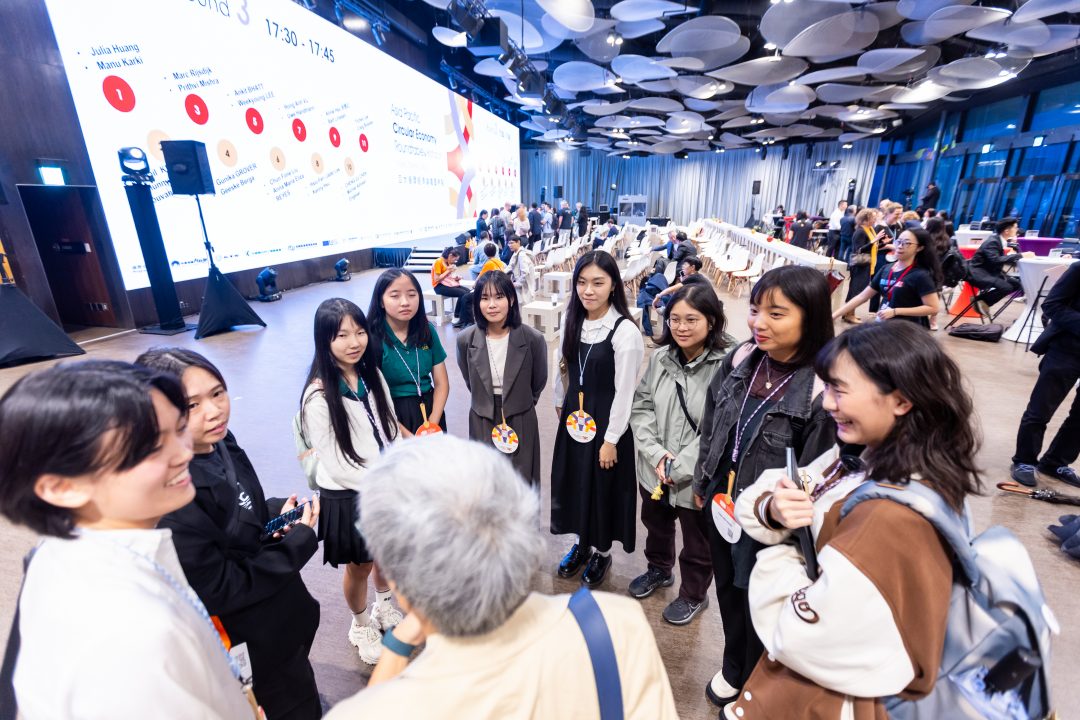
Connecting Youth with the Circular Economy: From Knowledge to Understanding
Circular economy is no longer merely an environmental issue—it is the language of the future economy. Youth participants understood that sustainability is more than carbon reduction; recycling is not the circular economy, and waste reduction is not the endpoint. Instead, the focus is on supply chain transformation, circular business models, policy innovation, and financial and accounting system redesign.
Design students reflected: “In future product design, how can I prevent accelerated obsolescence?”
IT students asked: “How can data transparency influence carbon-related behaviors?”
Business students considered: “How can circular business models create profit incentives?”
Even high school students observed: “Youth voices can truly be heard.”
For the first time, these participants gained a cross-departmental, international perspective, comprehensively understanding the challenges and transformations facing the circular economy. Forum topics covered industrial circular ecosystems, consumer governance, digital tracking, and more, illustrating both common challenges and differences in global policy, technology, and market practice. Notably, the consumer-oriented carbon disclosure session prompted deep reflection on achieving net-zero: relying solely on production-side emission reductions is insufficient; consumer behavior and systemic design are equally critical.
The forum emphasized international collaboration, cross-sector integration, and systemic governance, highlighting that circular economy involves more than technology or industry—it engages culture, lifestyle, and social behavior. Design thinking, policy guidance, corporate innovation, and financial support must operate in concert to facilitate industrial transformation and market implementation.
Circular economy is not a linear path, but a system of cross-disciplinary collaboration, requiring redefinition of demand, business model design, and governance architecture to generate shared economic and environmental value.
This forum not only expanded youth understanding of the circular economy but also highlighted their potential influence. Even as students, through daily behavior, educational advocacy, and intergenerational dialogue, they can practice circular principles. Circular economy represents an ongoing, systemic journey: it is not merely an environmental or sustainability topic, but a necessary approach where the economy drives circularity and circularity reinforces the economy.