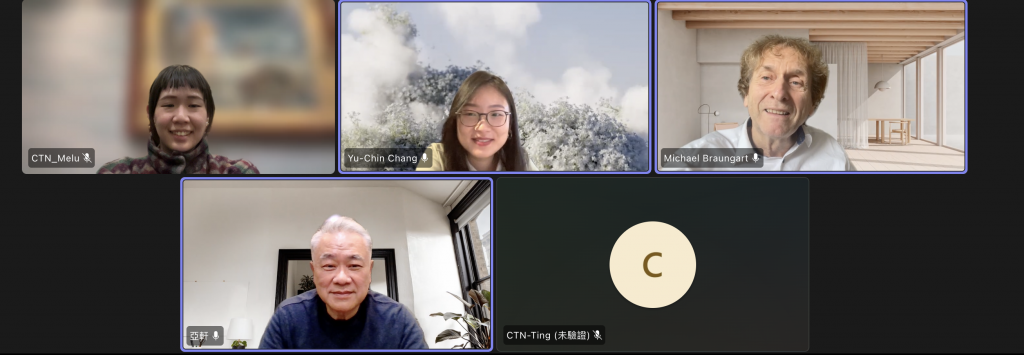
In a 2026, dialogue between Charles Huang (Chairman, Circular Taiwan Network) and Michael Braungart (Co-founder, Cradle to Cradle), the two pioneers challenge the prevailing "efficiency" narrative. They argue that the core crisis is not a lack of efficiency, but the inherent contradictions of linear thinking. By attempting to make a flawed system "less bad," we are merely slowing our descent rather than redesigning our ascent.
The Efficiency Trap: Chasing "Less Bad" While Ignoring "Good"
“If you become more efficient within a wrong system,” Braungart argues, “you only postpone the disaster.”
This is the linear paradox: the more we optimize a "take-make-waste" model, the more we entrench the very structures that cause destruction. To Braungart, mainstream "circularity" is often just linear thinking in disguise, squandering resources on "footprint reduction" rather than "positive impact."
Charles observes this same stagnation in global policy. To dismantle this systemic deadlock, he proposes The Circular Trilogy: a strategic pivot that begins with a "Good Idea" (Systemic Solution), is catalyzed by "Good Governance" (Multi-stakeholder Synergy), and is scaled through "Good Business" (Value-driven Models).
The Ownership Friction: From Possessing Goods to Accessing Services
A key structural barrier lies in how we define value.
The dialogue delved into the friction between Possession and Utility. Charles identifies "Ownership" as the primary structural bottleneck. He posits Product-as-a-Service (PaaS) as the fulcrum for decoupling economic growth from resource consumption. When a manufacturer’s mandate shifts from "selling volume" to "delivering performance," the incentive structure fundamentally changes toward durability and modularity.
Braungart adds a critical layer of Material Identity. While he respects the ownership of cultural or emotional assets, he argues that rare or toxic materials must never be "owned" by individuals. By hoarding substances that cannot safely reintegrate into the biosphere, we are effectively incurring a "resource debt" from future generations, a debt that linear thinking has no mechanism to repay.

Wizards and Prophets: Two Paths to Transformation
The two leaders also contrasted their methodologies for social change:
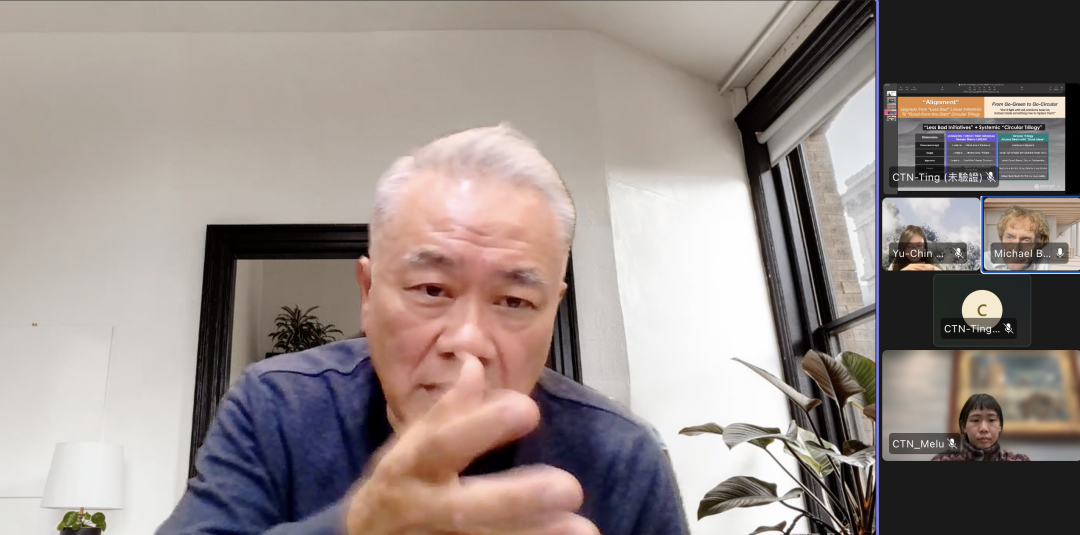
Charles advocates for a holistic, "all-in" approach: Systems Partnership. By aligning governments, industries, and institutions early to create the conditions for scale. Transformation, in this view, depends on coordinated action and shared incentives.
Michael remains wary of consensus-based "compromise." Like Henry Ford, who ignored the call for "faster horses" to build the automobile, Michael favors Prototypes. He believes in shocking the market with tangible, patent-protected innovations that prove a new reality is possible.
The Taiwan Experiment: Scaling Value into Business
This intellectual friction is not merely academic. At the 2025 Asia-Pacific Circular Economy Roundtable & Hotspot, these theories were put into practice. The forum demonstrated how Michael’s "innovation-first" approach is merging with Charles’s "systemic collaboration."
Taiwan is currently serving as a Regional Living Lab, transforming "Design Value" into "Business Scale." By moving beyond material labeling to Digital Product Passports (DPP) which track quality and value rather than just "recycled content", the region is redefining what a "Good Business" looks like in a post-linear world.
Ultimately, circularity is not a technical adjustment; it is a commitment to intergenerational justice. When we stop settling for being "less bad" and start designing for "true good," we finally open the door to a future that is restorative by design, not just by coincidence.